Here’s one way not to open a sales letter

When a new copywriter sends me inept stuff, I understand. But inept stuff from people who should know better takes me aback.

Take, for instance, the opening sentence from an email that graced my inbox today. It was written by a recognized pro. Right after “Dear Steve” it said, “I know your time is valuable. So I won’t waste it. I’ll get right to the point.” Really? The writer just wasted 17 words divided into three sentences with reader-stopping periods to tell me she would get right to the point — when she could have gotten right to the point. Setting aside that the “I’ll get right to the point” thing is overused and woefully non-compelling, she would have lost no meaning and wasted less of my time had she at least nixed the first two sentences.

I didn’t bother with the fourth or any other sentences.

—Steve Cuno


PR Lesson: Ben, Jerry and Lin-Sanity
Well-handled, but sometimes an official apology 
rings more sincere with a little less officialness 

Oops. Ben & Jerry’s put pieces of fortune cookie in their Lin-Sanity frozen yogurt. When accusations of racial stereotyping erupted, Ben & Jerry’s did two smart things: (1) They replaced the fortune cookie bits with waffle cone bits. (2) They issued an apology.

Well done. Except, well, the apology was stuffy. Corporate-y. Arguably off-brand for Ben & Jerry’s. 

Before I share a suggested rewrite, please read their statement:

“On behalf of Ben & Jerry’s Boston Scoop Shops we offer a heartfelt apology if anyone was offended by our handmade Linsanity flavor that we offered at our Harvard Square location. We are proud and honored to have Jeremy Lin hail from one of our fine, local universities and we are huge sports fans. We were swept up in the nationwide Linsanity momentum. Our intention was to create a flavor to honor Jeremy Lin’s accomplishments and his meteoric rise in the NBA, and recognize that he was a local Harvard graduate. We try demonstrate our commitment as a Boston-based, valued-led business and if we failed in this instance we offer our sincere apologies.”

The tone, word choices and stuffy phrases would make any investment banking firm proud. But that’s not the Ben & Jerry’s we know and love. Not that they asked, but I might have suggested something more Ben & Jerry-ish. Not funny like their product names — racial insensitivity isn’t funny — but shorter and more real. Like, perhaps:

“We apologize. The idea behind our Linsanity flavor was to honor Jeremy Lin’s meteoric rise in the NBA and recognize him as a Harvard graduate. Ben & Jerry’s deplores any form of racial stereotyping. Clearly we hadn’t thought this through, and we promise to pay better attention in the future. A sincere THANK YOU to all who called this to our attention.”

Now, I wouldn’t write an apology like that for just any organization. But Ben & Jerry’s has trained us to expect them to speak with a non corporate-y voice. They should keep it up, even — or perhaps especially — when they’re apologizing. That way we can know it’s really Ben & Jerry’s speaking, and not some stuffed-shirt PR pro paid by the word.

—Steve Cuno
 
 
How Not to Do Bad Research

If you read and committed to memory Chapters 8 and 9 of my book Prove It Before You Promote It* (respectively, “Help Stop Research Abuse” and “How to Predict a Marketing Success”), you know that much of what passes for market research is bogus. This is not to say that all marketing research is inept or worthless, only that much of it is, and that it behooves the savvy marketer to learn how to tell the difference.

One form of so-called research that is growing in popularity is the online poll. In his podcast last week, neurologist Steven Novella does a great job of exposing the folly that many mistake for research. No need for me to summarize; just click below and enjoy the nine-minute excerpt for yourself.

—Steve Cuno

*P.S. If you haven’t read the chapters or, worse, if you don’t own a copy of the book, shame on you. You can order by clicking here now. If you want your copy signed, email me and I’ll watch for your order.

Click the arrow below to hear neurologist Steven Novella expose the folly known as the online poll 
(Length: 9:34. Worth every second. You can listen to the entire podcast by clicking here.)


Picture
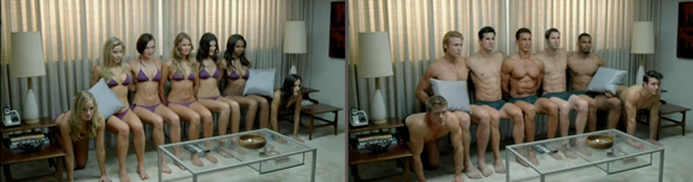
Toyota “It’s Reinvented”: Is it OK to use sexual exploitation to sell cars (as if it does) as long as you exploit BOTH sexes?
Cuno’s Super-Short Super Bowl Commercial Reviews:
My Two Cents, Part II

Overall review: Some fun short films, but not much advertising.

Toyota “It’s Reinvented”: This is a funny commercial. Depending, that is, on one’s taste — always a challenge with humor. But this commercial is also a serious case of “we couldn’t come up with a new way to say ‘buy this car,’ so we created a farce instead.” The spot may promote awareness — so far, Hulu viewers have voted it their favorite — provided you remember the sponsor and not just the gags. But either way, “awareness increases sales” is a myth the ad industry seems to believe and hopes clients believe. That’s because, compared with creating sales, creating awareness is easy.

Volkswagen “Bark Side”: Adorable. I love dogs. This spot makes me like the people who cooked it up. Doesn’t make me want to buy a VW. (I am, however, more seriously considering getting a dog.) And I can tell you that in that regard I am not statically unique. That’s the trouble with commercials that are purely entertaining while bereft of a claim or benefit. Plus, is it just me, or is there something off-puttingly self-congratulatory about a spot whose main objective seems to be not to feature a product, but to pay homage to last year’s spot? 

Volkswagen “The Dog Strikes Back”: Ditto, except not really adorable. As for the Darth Vader gag at the end, the word that comes to mind is “reaching.”

Honda “Matthew’s Day Off”: Looks like another desperate creative team that couldn’t come up with a fresh way to say ‘buy this car.’ I wonder what percentage of this year’s viewers (1) saw the referenced movie and, of those who did, (2) remember it and, of those who do, (3) remember it fondly and, of those who do, (4) will transfer that fondness to Honda and, of those who do, (5) will buy the car as a result. But on the positive side, at least the ad agency gets to brag about getting to meet Matthew Broderick.

Bridgestone “Don’t Underestimate the Beadle”: Maybe I would get this were I a sports fan. Admittedly, I am not part of the Super Bowl-watching demographic. I have enough trouble remembering which sport all the fuss is even about. (Football, right?)

Chevrolet: “2012”: Kudos to Chevy for remembering to make a product claim. Funny how many so-called advertising experts forget to do that, and go for entertainment value in its place. And how many clients buy it.

Doritos: “Man’s Best Friend”: One of few spots this year that actually tries to sell the product. Sure, it’s hyperbole, but at least it has a claim, namely, that Doritos are good enough to buy the silence of a cat owner’s spouse. Plus the spot is danged fun. If you take offense at the alleged violence against cats, you’re thinking too hard. Should a dog someday be brought up on cat-icide charges and use the Doritos Defense, I’ll apologize.

Chrysler “Halftime in America”: A bit schmaltzy for my taste, but that is neither here nor there, as I am but a focus group of one. As for those who claim that the spot is a covert Obama plug, all I can say is, Oh come on.

Audi: “Vampire Party”: OK, fine, the creative team found a unique and memorable way to say “this car has LED headlights.” But in advertising, it’s usually a good idea to translate a feature into a relevant benefit. I suppose if vampires are a problem in your neighborhood, this spot succeeds.

Sketchers: “GOrun Mr. Quiggly”: In the tradition of the old PF Flyers commercials (remember those?), the spot essentially says “these shoes will make you run faster.” Trouble is, the spot doesn’t demonstrate the claim. Hmm. Could it be because we all know that a shoe can’t really do that? Which makes me think the creative team might have worked a little harder to come up with a viable claim. On the other hand, perhaps I am being a bit too literal-minded, as I am wont to do. Perhaps the spot’s real objective is to say, “Sketchers are cool.” In that case, I leave it to you as to whether it pulls it off.

—Steve Cuno
 
 
Picture
Fun short film. But is it advertising?
This Year’s Super Bowl Commercials: 
My Two Cents, Part I

I suppose there are lots of potential reasons to run a TV commercial. 

Maybe you only want to inspire confidence in your brand, but not necessarily drive sales of a specific product. Maybe you want people to know you care about the environment so that you needn’t fear arriving at work to find the Save the Praying Mantis Coalition picketing your plant. Maybe you want investors to feel good about the stock they just bought. Maybe all you want is for the Board of Directors to take pride in the commercial. Maybe you want to be able to brag that your spot ran in the Super Bowl. Maybe you want your spot to accrue oodles of awards that you can use to attract more clients.

Fine. But usually, the idea behind a TV commercial is to sell something. Especially when you pay $3,000,000.00 or more to air it just one time. Plus the million(s) you spent making the darned thing in the first place.

Now, before we discuss the Super Bowl spots, let’s debunk a big myth about what sells in advertising. Many if not most ad people preach that if your commercial is “truly creative” — whatever the devil that means — it will sell. It is nonsense. 

There are, however, plenty of ways to enhance a commercial’s selling power. For now I’ll name just four: 
  1. Make sure the right people see it. Choose the right networks, stations, shows and times. At $3,000,000.00 per half-minute, you’d better be certain that the folks glued to the Super Bowl are the ones you need to reach. Good bet for colas, beers and automakers. But yogurt? Go-Daddy? The History Channel?
  2. Be relevant. Present benefits that matter to your customers. Note: Merely entertaining them doesn’t count. The Acura spot, for instance, does a better job of selling Seinfeld reruns than of selling Acuras.
  3. Make your product the hero. Making your product a prop in a comedy about something else (Matthew Broderick’s day off) doesn’t count. Neither does having your product emerge as the hero by doing something other than what it is intended to do (like having a car’s headlights kill vampires). 
  4. Take advantage of TV’s visual nature. Ideally, a viewer should be able to turn off the sound and infer a product benefit from the pictures alone. Good luck on that one with most of this year’s spots.

By the standards above, most of this year’s Super Bowl spots flunk. Don’t get me wrong. Many of the spots are utterly delightful. Loved ’em. They are great short films. Just not particularly efficient advertising.

In my next post, I shall lighten up and do some one-line reviews. 

—Steve Cuno
 
 
Picture
View this and prior year’s Super Bowl spots by clicking the photo.
Ta-daaa:
Where to See All of This Year’s Super Bowl Commercials
 
For those who, like me, would rather skip the game and cut straight to the commercials, it’s Hulu to the rescue. 

Thanks to Hulu and miracle of streaming, you can view all of this (and prior) year’s Super Bowl spots. You can vote “like” or “dislike,” or skip to the next spot without voting. You can also see how others voted. 

But please promise to remember two things about the voting:
  1. You’ll be looking at votes of people logged on to Hulu, not a sample of viewers in general.
  2. Either way, the number of people who click “like” has nothing to do with the number of people who bought as a result of seeing the spot.

This week I shall post my thoughts on some of the spots. (Lucky, lucky you.) But for now, watch and enjoy (or not) by clicking here

—Steve Cuno
 
 
Picture
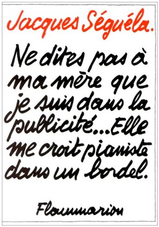
Yes, it’s a real book. For a translation of the title, read the blog post.
Whorrible marketing for Ron Paul?

Perhaps you remember or read about the days when Michael Jackson was a boon to Pepsi’s marketing.  But then Jackson fell, nay, nose-dived from public favor. Pepsi couldn’t distance themselves from him fast enough. 

But at least Jackson was a paid endorser. What do you do with an unsolicited endorsement that may cast aspersions? 

The Moonlite Bunny Ranch, a legal brothel not far from Carson City, Nevada, has officially endorsed alleged presidential candidate Ron Paul. They’re even raising funds for him. Individual employees are donating tips. Quoth Hustler centerfold Cami Parker: “I really appreciate the fact that Ron Paul respects states’ rights and individual rights. It seems like he really understands our rights to do what we want.”

(Ironically, a significant number of Mormons living in Nevada find Paul’s rhetoric reminiscent of their late prophet-leader Ezra Taft Benson. I was going to add some wisecrack about the mainstream Mormon Church’s doctrine of polygamy, but never mind. It’s been done.)

In 1979, French adman Jacques Séguéla published his autobiography entitled, Ne dites pas à ma mère que je suis dans la publicité… elle me croit pianiste dans un bordel. (“Don’t tell my mom that I’m in advertising… she thinks I’m a pianist in a brothel.”) Per Séguéla, if any ad agencies want to endorse Paul, right now their efforts might nicely dovetail with those of the Moonlite Bunny Ranch. 

—Steve Cuno
 
 
Anomaly Folly

A surprising number of people say they would prefer a doctor who makes an intuitive rather than a statistical diagnosis. Often they are buoyed by tales of anomalies where a doctor defied the odds and won. Trouble is, if an anomaly were a safe bet, it wouldn’t be an anomaly. As Wichita State University’s Charles Lambdin said, “It is usually in patients’ best interest to be treated like a ‘statistic.’ When doctors hear a decision aid has a 25% error rate and state ‘I can beat that,’ this should raise suspicion.” 

Likewise, when an ad agency defies proven practice — assuming they even know about it — clients should think twice about whether they have the right agency. 

There exists nearly two centuries’ worth of accumulated knowledge about what works (and what does not work) in advertising. Using anomalies to justify disregarding that knowledge is like ignoring an airplane’s instruments because of the rare case where someone relied on intuition and lived to tell about it. “Trust your feelings” worked for Luke Skywalker, but I seem to recall that Star Wars was a work of fiction.

There is, of course, another problem. I alluded to it a moment ago. Most marketers are unaware of the body of knowledge, not to mention of what constitutes a controlled marketing test. Of the few who know, many disdain it. It’d be one thing if the money they gamble were their own. But since it’s their client’s money, you would think they might feel a certain, oh, I dunno, fiduciary responsibility to stack the odds in their client’s favor.

—Steve Cuno