Predictive Marketing Tip #5: 
Don’t Ask. Watch.

By now I hope that I have convinced you of the futility of asking people to tell you what they think, do, will think, or will do. They will give you answers, even sincere ones. Just not any that you dare count on.

So how on earth does a marketer predict a market’s behavior? Easy — at least in concept. Create a real situation, turn your market lose in it, and watch what they do. 

To find out if more people will browse a table with a blue or red sign on it, skip the focus groups. Put out a blue sign, hide, and watch. Then put out a red one, return to your hiding place, and watch again. Do this often enough in enough stores and you will fast learn which sign, if either, sells more.

With a little imagination, you can figure how to do much the same thing with direct mail, print ads, and the interactive media. More on this coming up.

—Steve Cuno

 
 
Branding Tip: Before You Brag, Become.

When a hospital chain learned that patients ranked bedside manner second only to positive clinical outcomes, they immediately began running ads bragging that their bedside manner was warmest and cuddliest this side of the Mississippi. Trouble is, they neglected first to take an honest look as to whether their beside manner was indeed good. They also neglected to take steps to ensure consistent delivery on such a promise.

Brag all you want. But short of brags based on substance, you have no brand. You have hot air.

—Steve Cuno
 
 
Please, no, not again, not so soon

This just in from Advertising Age: “The first major batch of political ads will be hitting TV and the Web in time for the holidays. The ad spend is expected to reach $2.5 billion to $3.2 billion, compared with the record of more than $1 billion from the 2007-2008 campaign cycle, according to Kantar Media’s Campaign Media Analysis Group.”
 
 
Picture
Budding artist: my granddaughter at her piano
Advice for Marketing Arts and Causes

An arts organization had no better judgment than to ask my advice. Here are excerpts from my comments, in hopes they prove useful to a reader or two. These observations also apply to cause-related marketing. Both seek to better the community, and both rely on getting the community to dig deep to support them.

Art is about personal expression, but marketing is about what the market wants, artistry aside. When you put on your marketing hat, really put it on. Or, to be blunt, think more like a marketer and less like an artist. You can do it without compromising your artistic morals, but it won’t be easy. A self-imagined artist myself who also happens to be a marketer (and who also has a scientific bent — gad, I’m a mess), I fight this inner battle daily. I also fight it with clients. Like when I want to shake them by the lapels and yell, “So what if you don’t like it? Can’t you see that this is GOOD STUFF?” I also find myself fighting the opposite battle: “So what if Design A is more aesthetically pleasing than Design B? Design B outsold Design A two-to-one!”

Focus on the benefits you offer the people to whom you’re selling. (Like the word or not, and artists tend not to, selling is very much what you’re trying to do.) Artists tend to overemphasize what matters to themselves, their craft and their organization, rather than what matters to their target markets. Rarely does what matters to the marketer matter to the market. Whoever engineered the first M&M’s might have been quite proud of pulling off near-perfect round, hard shells emblazoned with a neatly-printed M. But parents — the target market — were unimpressed. Only when a marketer pointed out that M&M’s protected kids, walls and furniture from chocolate smears did sales take off.

Your message may be clear to you. But you’re not the market. Boil the essence of your cause down to one, pithy sentence, and field-test it to ensure it registers even on the average person paying only half-attention. Then you know you have a winner. After that, create a one-paragraph and a one-page version. Then you can haul out one or the other, as circumstance warrants, with greater assurance of making your point. I once made a like observation to the leader of a political group. The irony was lost on him as he bellowed, “I am sick of everyone telling me that my message is unclear.”

You have more than one market: ticket buyers, sponsors, prospective sponsors, donors, taxpayers, and the artists themselves. Not all want the same things. The trick is in finding out and addressing what matters to whom at any given moment. If you see in this a seeming contradiction to my suggestion about coming up with one pithy sentence, you’re right. And wrong. Marketing is about continuums, rarely about black-and-white.

In your internal conversations and your personal reasoning, you need to be rational about what you’re selling, and the benefits you truly offer each market. But you cannot afford the mistake of assuming that the people you’re selling to are rational.

It is not uncommon for artists to level an almost scolding tone at businesses and markets who don’t quite “get it.” You never win by saying or implying that your publics are wrong, or by presuming that they somehow owe you their support. Never mind what you think they should want or should care about. You must deal with what they do care about.

—Steve Cuno
 
 
Somebody Out There Likes Us

Since there’s no modest way to say this, please permit me to unabashedly brag. The new issue of Deliver magazine ranks its 5 Most-Liked articles. I wrote two of them. Here they are, should you wish to take a look:

When Direct Mail Goes Wrong
What’s a “Good” Response?

—Steve Cuno
 
 
Predictive Marketing Tip 4, continued:
The Bathroom Test


In my last post, I warned against assuming that survey responses are honest and reliable, even when they’re anonymous. Here’s your proof. I call it the Bathroom Test.

In any group, ask by show of hands how many people usually bother to wash their hands after using a public restroom. Odds are all hands will go up. No surprise there. Few people admit to unsavory habits when others are watching.

So, next, find a new group and allow everyone to answer the same question on an anonymous written form. Chances are between 40 and 60% will admit to not washing.

It’s safely anonymous, right? Before assuming as much, try one more test. Hang an “out of order” sign on the outside of a bathroom stall door, and then hide inside with your clipboard. (Don’t ask how I know this.) Count how many wash. Chances are you’ll find that about 80-90% skip.

Here’s the important part as it pertains to marketing research: Not everyone in an anonymous survey who claims to wash but doesn’t is lying. More likely, they are guilty of hindsight bias — looking back and remembering only the times they did wash.

The First Moral of the Story: In research, never count on what people say they do, or predict they’ll do. No one can do that with the least degree of reliability. 

The Second Moral of the Story: Be choosy about whose hand you shake.

—Steve Cuno
 
 
Predictive Marketing Tip 4:
Don’t Ask 
(Because They Can’t Tell)

When you ask people what they think, what they do, and what they think they’ll do with regard to your advertising, a number of factors affect their answers. Here are just a few:

•  What they think you want to hear
•  How they want you to perceive them
•  Their self-concept
•  Day of the week and time of year
•  Weather
•  Their mood at the moment
•  Their desire to help or harm
•  Paper color (written questionnaires)
•  The order in which questions are asked
•  Opinions of others

Note that the above have nothing to do with how people will react to your ad. They only influence the answers they give you as to how they think they’ll react.

Do not fall for the myth that allowing people to respond anonymously makes their answers honest and reliable. Yes, people experience trouble when it comes to being honest with researchers. But, worse, they also experience trouble when it comes to being honest with themselves. Or, for that matter, even knowing themselves well enough to be honest about it in the first place.

Don’t believe me? Try the Bathroom Test. Coming up in next week in my next post.

—Steve Cuno
 

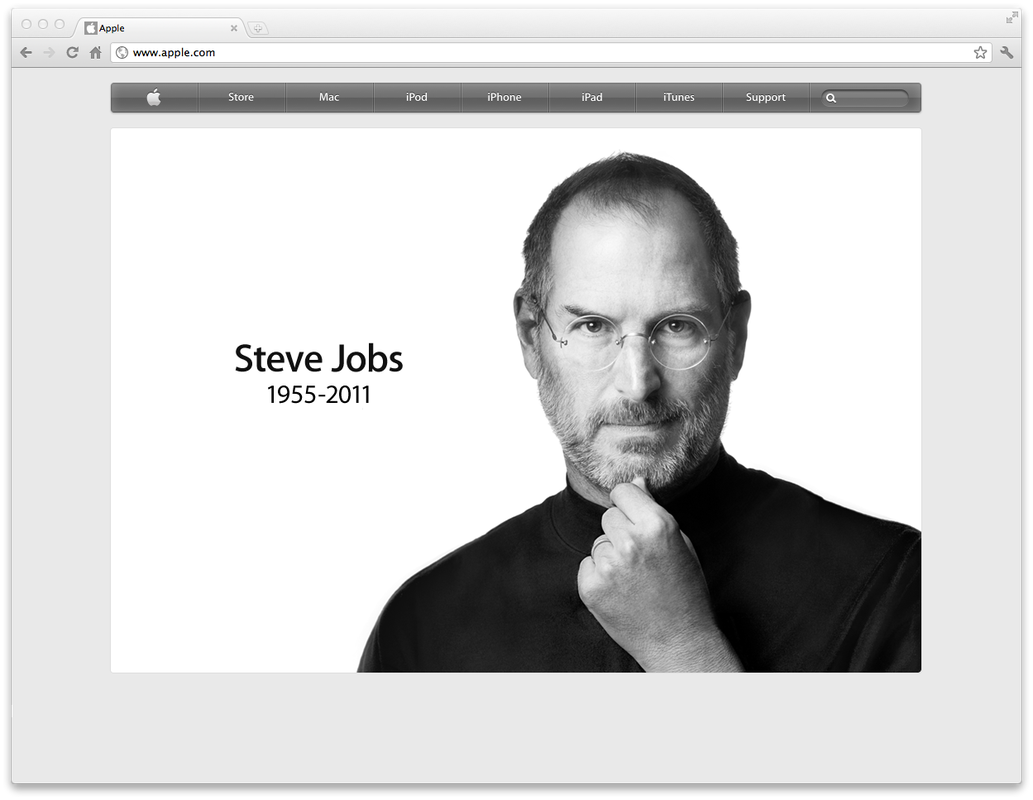
Farewell.

10/06/2011

1 Comment

 
Steve Jobs never heard of the RESPONSE Agency. 
But as can be said of many companies in existence today, he was a big part of our success.
 
 
Predictive Marketing Tip 3:
Test Small, Succeed Big

Never bet the farm on a hunch. Take a small garden plot and bet that instead. If it fares well, go ahead and implement the idea farm-wide. If it fares poorly, it was worth one small garden plot to find out.

That is why McDonald’s introduces new items in selected markets before going taking them system-wide. In 1985, the Coca-Cola Company could have spared itself needless expense and embarrassment had it done the same. That is also why savvy direct response marketers try their ideas for products, strategies, headlines and layouts on small numbers of people before investing in rolling them out to the world at large.

When your gut tells you that you have a hot new idea or ad campaign, try it out on a representative market sample. Put in place empirical measures as to its effectiveness. If it flies, roll it out. If it fails, be glad you approached with caution.

—Steve Cuno